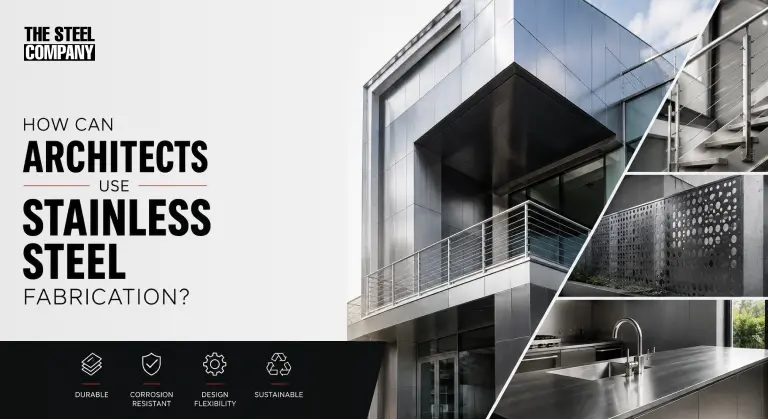
A good architectural design is not only about the main structure. Small details such as a lift panel, railing, wall trim or reception feature can also change how a space looks and works.
This is where stainless steel fabrication becomes useful for architects. Stainless steel can be cut, bent, welded, polished and finished to suit the requirements of a project. It can also be combined with different finishes, colours and patterns.
For architects, this means they can develop stainless steel elements around the design instead of choosing only from standard sizes and shapes.
From Architectural Drawings to Finished Stainless Steel Components
Fabrication begins with required information from architects such as the dimensions, shape, type of materials used, finishing process and points of installation. Such information enables the fabricator to produce the sharp components from stainless steel.
From this point, the fabricator prepares the plan as per requirements. This may also include preparation of precise measurements, selection of fabrication method and type of finish.
Stainless steel fabrication services includes the following operations such as:
- Cutting by means of CNC or laser
- Bending operations
- Welding
- Edge finishing
- Polishing
- Profile forming
- Etching
- Pattern cutting
- PVD finishing
Custom- made stainless steel fabrication is especially useful in cases when the design includes curved parts, uncommon dimensions or complicated patterns.
For instance, the architect can provide the specifications for the required profile and PVD colouring. After checking everything, the fabricator can confirm what is needed and make the parts according to the specifications.
Thus, it becomes possible to ensure that the stainless steel product is fully compatible with the architectural design of the building.
Where Can Architects Use Stainless Steel?
Architects can use stainless steel across different parts of a building. It can be a visible design feature or a smaller detail that helps different materials meet neatly.
Stainless Steel for Elevators and Lift Interiors
Lift interiors are seen and touched every day, so the materials need to handle regular use while maintaining the intended appearance.
Architects can use fabricated stainless steel for:
- Lift wall panels
- Door surrounds
- Control-panel surrounds
- Ceiling details
- Corner trims
- Decorative panels
The surface finish can then be selected to suit the interior design. A hairline finish creates a simple, understated appearance, while a mirror finish adds reflection to the lift interior. PVD finishes can also introduce colours such as gold, rose gold, bronze, black or champagne.
With stainless steel metal fabrication, these elements can be produced to match the lift’s dimensions, layout and design details. This gives architects more flexibility when standard panels do not fit the required specification.
Feature Walls and Interior Cladding
Stainless steel can also be used to create feature walls and decorative interior surfaces in finishes such as:
- Mirror
- Hairline
- Satin
- Brushed
- Vibration
- Etched
- Embossed
- Water ripple
- Hammered
- PVD coloured finishes
For example, a water ripple sheet can add movement to a reception wall. An etched panel can carry a pattern, logo or decorative design. A hammered finish can add texture where a plain sheet would look too simple.
The Steel Company supplies decorative stainless steel sheets for wall panels, ceilings, lift interiors, column covers, counters and furniture-facing applications.
This allows stainless steel to become part of the interior design instead of being used only as a functional material.
Stainless Steel Railings for Stairs and Balconies
Staircases, balconies and entrances often require railings that fit the shape of the space while meeting the project’s design and safety requirements.
Stainless steel can be fabricated for staircases, balconies, terraces and entrances. Depending on the design, the fabrication can include handrails, posts, supports and custom sections. Architects can also combine stainless steel with glass or other materials.
The grade should match the installation environment. An indoor railing does not face the same conditions as a railing exposed to rain, humidity or coastal air. Custom metal fabrication can be useful when the railing has unusual dimensions, curves or connection details that are not available in standard railing systems.
Stainless Steel Profiles for Architectural Detailing
Architectural details often need a neat way to finish edges, joints and transitions between different surfaces. This is where stainless steel profiles can be useful.
A narrow profile can make a big difference to the final appearance of a space. Profiles can create clean transitions and protect exposed edges.
They can be used around:
- Wall corners
- Floor junctions
- Door frames
- Tile edges
- Furniture
- Ceilings
- Panel joints
- Bathroom areas
U-channels, L-angles, T-profiles and V-groove profiles are some options used for architectural detailing.
For example, a T-profile can create a clear separation between two wall panels. An L-angle can finish an exposed tile or panel edge.
Stainless steel fabrication services can also produce custom profiles when a standard shape does not suit the drawing.
Stainless Steel for Furniture and Interior Details
Furniture and built-in features often need small metal details that fit the overall interior design. Stainless steel can be fabricated to create these details while adding a clean, structured finish.
It can be fabricated into table frames, furniture legs, counter details, reception desks, shelving components and decorative inserts.
This can be useful in hotels, restaurants, offices, retail spaces and luxury residences where the furniture needs to match the rest of the interior.
For example, an architect can combine a stone reception counter with a PVD stainless steel frame. The same finish can then be used on smaller trims elsewhere in the space.
This helps maintain a consistent material and colour theme throughout the interior.
Stainless Steel Signage and Architectural Branding
Stainless steel signage can be designed to match the building’s architecture, interior finishes and overall brand identity.
It can be fabricated into letter signs, entrance signs, backing panels and branded wall features.
Architects can also use laser cutting or etching for logos, lettering and patterns. PVD finishes can add colour when the signage needs to match a brand or interior scheme.
This makes the sign part of the architectural feature rather than a separate object attached to it.
How Stainless Steel Finishes Change the Look
The shape of stainless steel is only one part of the design. The finish can change how the same component looks in a space.
| Finish | Typical visual effect |
|---|---|
| Hairline | Clean linear appearance |
| Satin | Softer and less reflective |
| Vibration | Textured and more detailed |
| Etched | Suitable for patterns and branding |
| Embossed | Adds physical surface texture |
| Water ripple | Creates a flowing reflective effect |
| Hammered | Adds a stronger textured appearance |
| PVD | Adds colour while retaining the metallic look |
Therefore, architects should consider the finish along with the shape and application.
The finish can also affect how marks, reflections and surface details appear, so samples can be useful before final approval.
Using PVD Finishes in Architectural Design
When a project calls for more than the standard silver appearance of stainless steel, PVD finishing gives architects more options for colour and finish.
The Steel Company offers finishes such as gold, rose gold, bronze, black, champagne and blue. These can be specified to complement the wider colour palette of an interior.
These finishes can be used on fabricated panels, profiles, furniture elements, signage and other architectural components.
For example, bronze PVD can be used on a reception feature and continued through smaller trims and furniture details. Gold or rose gold can create a stronger decorative effect in a hotel or luxury residential interior.
The main benefit is consistency. Different stainless steel elements can follow the same colour and finish direction across the project.
Why Custom Fabrication Helps Architects
Every project has its own dimensions, details and finish requirements. Custom fabrication gives architects more control over how each stainless steel component is made and how it fits into the overall design.
With custom stainless steel fabrication, the project team can decide:
- Required dimensions
- Material grade
- Thickness
- Shape
- Surface finish
- PVD colour
- Edge treatment
- Pattern or design
- Fixing details
This is especially useful when a project has unusual dimensions or when several stainless steel elements need to match.
Instead of changing the design to suit a standard product, the architect can develop the stainless steel component around the project requirements.
What Should Architects Give to a Stainless Steel Fabricator?
Before fabrication begins, the fabricator needs enough project information to understand exactly what has to be made and how it should look.
When working with stainless steel fabricators, architects should provide the details needed to understand the requirement.
These can include:

Drawings

Thickness

Colour

Installation details

Material grade

Finish

Quantity

Samples
The Steel Company states that architects can share drawings, cut lists, finish choices or room-by-room lengths for profile requirements. The company can then confirm the grade, profile size and finish and provide shop drawings or sample pieces where required.
Final Thoughts
Architects can use stainless steel fabrication for much more than basic metalwork.
It can become a lift interior, feature wall, railing, architectural profile, signboard, furniture detail or decorative PVD element.
The real value is the ability to take a design requirement and turn it into a finished component with the required shape, size and finish.
When architects and fabricators work together from the early design stage, stainless steel can fit the architecture instead of forcing the architecture to fit a standard product.
FAQs
An architect customise stainless steel according to their drawings?
Yes. Custom stainless steel fabrication allows components to be cut, bent, welded, polished and finished according to project drawings and dimensions.
Where can architects use stainless steel fabrication?
Architects can use it for lift interiors, wall cladding, railings, profiles, signage, furniture details, partitions, ceilings, façades and decorative interior elements.
Can stainless steel fabrication include coloured finishes?
Yes. PVD finishing can provide colours such as gold, rose gold, bronze, black and champagne for suitable architectural applications.
What information should architects provide to fabricators?
Drawings, dimensions, quantity, grade, thickness, finish, colour and installation details can help the fabricator understand the project requirement.
Can architects use stainless steel for both interior and exterior projects?
Yes. Stainless steel can be used in both areas, but the material grade, finish, detailing and installation environment should be considered before specification.
