
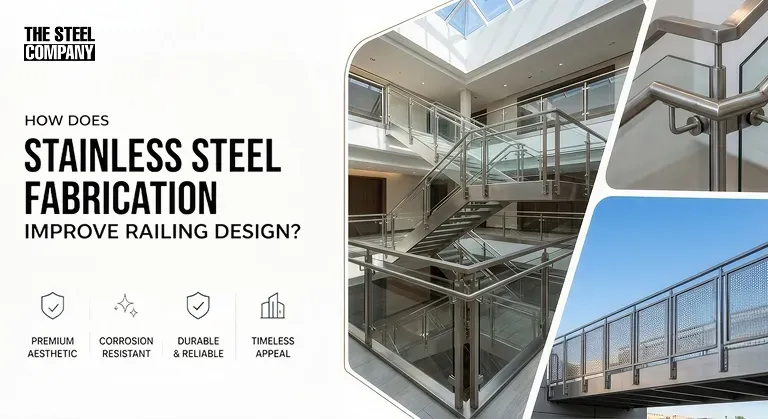
Railings not only serve as support, but they also contribute to the overall look of the area. Materials, shapes, finishes, joints, and minor details all need to be considered. All of this is made possible with the help of stainless steel fabrication.
Instead of using standard components only, manufacturing processes allow you to cut, bend, join, buff, and finish the material as needed.
This way designers are able to come up with railings that match the layout of the area rather than modify it to fit the standard product. This plays an important role in case of modern residential or business buildings, hotels, shopping locations, or the like.
A proper design of a railing should seem to be a part of the building rather than an add-on. The application of right manufacturing technology makes it possible to turn simple stainless steel into a beautiful piece of design.
Why stainless steel works well for railing design
Stainless steel is already a common choice for railing work because it offers a clean appearance and works well in different types of spaces. However, the final result depends on more than the material itself. The method of processing the metal directly influences the railing.
Thus, a railing may be straight and simple, it may include bends, decorations, varied finishes, and individual connections. The process of fabrication makes all these possible.
Typical advantages include the following:
- A clean and modern look
- Sturdy and useful design
- Variety of surfaces finishes
- Individual sizes and shapes
- Convenient compatibility with other materials such as glass, wood, stone, etc.
- Possibilities of using both indoors and outdoors
- Improved joint and finishing control
Thus, stainless steel fabrication is not only concerned with creating a railing of certain measurements. It also allows controlling its design and performance.
How fabrication changes the railing design
A simple railing system can serve fine for a basic design. Still, many designs need specific dimensions, a particular shape, multiple angles, and other design requirements, and that makes the fabricating process extremely useful for handling the differences.
Instead of forcing a standard railing to fit the space, fabricators can work from the actual measurements and drawings. They can then cut, bend, and join the steel to suit the staircase, balcony, or other installation area.
For example, fabrication can include the following stages:
- Taking measurements of the required area.
- Determining which grade of steel is required for the railings.
- Choosing the pattern and appearance of the railings.
- Cutting the steel railings into the required pieces.
- Shaping the pieces into the needed shapes.
- Joining the components.
- Finishing and polishing the finished connections.
- Checking if everything is ready to be installed.
This process will help the designers to have more influence on the way the final product looks.
It also helps when the railing needs to match other architectural elements. A railing can be designed to follow the lines of a staircase, align with wall panels, or work with a particular flooring or interior finish.
Creating different stainless steel railing designs
One of the main advantages of fabricated railings is the range of designs that can be produced.
A simple straight railing may be suitable for a staircase or corridor. On the other hand, a more detailed design may be needed for a hotel lobby, luxury residence, or commercial entrance.
A stainless steel railing design can include different combinations of:
- Round or square handrails
- Horizontal or vertical members
- Glass panels
- Decorative profiles
- Custom brackets
- Curved sections
- Different surface finishes
- PVD-coloured stainless steel
- Combination of stainless steel with wood or other materials
The design should still remain practical. Too many decorative elements can make cleaning harder or make the railing look out of place.
For this reason, good fabrication focuses on both the visual idea and the way the railing will be used every day.
Stainless steel profile can improve small design details
Small components can make a noticeable difference to the finished railing. This is where a stainless steel profile can be useful.
Profiles, trims, channels, and angles can help create cleaner transitions between different surfaces. They can also be used around edges or as part of decorative detailing.
The Steel Company offers profiles in different shapes, including U-channels, L-angles, T-profiles, and V-groove profiles. These are available in grades such as SS 201, SS 304, and SS 316, with different surface finishes and PVD colour options.
For railing projects, a profile can be useful where a clean edge or a specific connection detail is required. It can also help maintain a consistent design across different parts of a project.
For example, the same finish used on a railing can be carried through to wall trims, floor transitions, furniture details, or other metal elements.
That creates a more connected look without making every part identical.
Choosing the right stainless steel grade
Not every project has the same environmental conditions. Therefore, choosing the right grade is an important part of railing design.
SS 304 is widely used for many interior and general railing applications. SS 316 can be considered for areas where the railing may face higher humidity or more demanding environmental conditions.
The choice should depend on the location, exposure, design requirements, and expected use.
| Railing requirement | Possible consideration |
| Indoor staircase | SS 304 can suit many general applications |
| Indoor commercial space | Grade and finish should match usage and design |
| Balcony railing | Consider exposure to outdoor conditions |
| High-humidity area | A suitable corrosion-resistant grade may be preferred |
| Coastal location | SS 316 may be considered |
| Decorative railing | Focus on grade, finish, colour, and detailing |
| Custom railing | Grade should be selected before fabrication begins |
The grade is only one part of the decision. Surface finish and fabrication quality also affect the final result.
How finishes change the appearance
A railing does not always have to look like plain polished metal.
Stainless steel can be supplied and finished in different ways. Common choices include mirror, hairline, brushed, and satin finishes. Decorative PVD colours can also be used when a stronger visual effect is required.
A mirror finish gives a bright and reflective appearance. A brushed or hairline finish gives a more subtle look and can work well with modern interiors.
PVD finishes can introduce colours such as:
- Gold
- Rose Gold
- Bronze
- Black
- Champagne
- Blue
However, the finish should be selected according to the complete interior or exterior design. A bright finish may work well as a feature, while a softer finish may be better for a large railing installation.
The same principle applies to decorative sheets and panels. Water ripple and hammered stainless steel sheets can be used in selected areas when a plain surface feels too simple.
Stainless steel balcony railing design
Balconies often need a railing that provides a clear boundary without making the space feel closed.
A stainless steel balcony railing can be designed in several ways depending on the building and the required appearance. For example, stainless steel can be combined with glass to create a lighter visual effect.
Another option is to use horizontal or vertical stainless steel members. These can create a more defined architectural appearance.
For balconies, the design should also consider:
- Available balcony width and height
- Connection points
- Exposure to weather
- Required level of privacy
- Cleaning and maintenance
- Compatibility with the building façade
- Overall appearance from both inside and outside
In addition, the railing should be measured carefully before fabrication. Small errors can become difficult to correct once the components reach the installation stage.
Stainless steel handrail and user comfort
The handrail is one of the most frequently touched parts of a railing. Therefore, its shape and finish matter.
A stainless steel handrail can be made in different profiles and sizes depending on the uses . Round handrails are common because they provide a simple and comfortable grip. Square and rectangular options can also work where a sharper architectural appearance is preferred.
The handrail should also connect neatly with posts, brackets, corners, and other railing components.
A good fabricated handrail should not only look straight. The joints should also be finished properly so that there are no rough edges or distracting connection points.
This is one area where fabrication quality becomes easy to notice. Poorly finished joints can make even expensive stainless steel look unfinished.
Using PVD with fabricated railings
PVD finishing gives another option for projects that want more than the usual stainless steel appearance.
With stainless steel fabrication, components can first be cut, formed, welded, polished, and prepared before the selected PVD finish is applied. The Steel Company states that its fabrication work can include CNC cutting, bending, welding, edge finishing, laser etching, and Ti-PVD colour coating.
This can be useful for projects where the railing needs to match other coloured metal elements.
For example, a black PVD railing may work with dark architectural details. Gold or champagne finishes can be used when the project calls for a warmer decorative appearance.
The important point is to decide the finish before production starts. This allows the fabricator to plan the material, dimensions, surface preparation, and finishing process correctly.
Where fabricated stainless steel railings can be used
Fabricated railings are suitable for more than residential staircases.
They can be used in:
- Residential staircases
- Balconies
- Terraces
- Office buildings
- Hotels
- Restaurants
- Shopping areas
- Showrooms
- Commercial staircases
- Entrance areas
- Corridors
- Public buildings
Each location may require a different design approach.
For instance, a stairway at home may just need a basic railing matching up with interior design. On the contrary, a hotel is likely to require a more elaborate railing with PVD colour and special details.
Likewise, a commercial structure may require a design that is simple to maintain and practical for constant use.
What makes fabrication important for a finished railing?
A railing can look simple after installation, but several fabrication steps are involved before it reaches the site.
The quality of these steps affects the final appearance.
| Fabrication process | Why is it important? |
| Measurements | Makes sure the railing will fit into the right place |
| Selection of material | Matches the railing with the environment |
| Cutting | Ensures that the parts have the correct size |
| Bending | Ensures proper curving and shaping |
| Welding | Joins the parts together |
| Grinding | Ensures smoothness of joints |
| Polishing | Achieves desired surface finish |
| Finishing | Provides the final look to the railing |
| Quality inspection | Detects problems prior to installation |
Thus, fabrication ensures good control from measurement to the final railing.
How to plan a custom railing project
Before purchasing a custom railing, it is useful to have certain details ready.
You may have the following information available:
- Dimensions of the site
- Railing height and length
- Drawings or sketches
- Desired stainless steel type
- Surface finish
- Desired color, if any
- Required number of railing sections
- Site of fitting
- Other materials like wood or glass to be included in the project
If the design is not final yet, the fabricators can check the requirement and provide alternatives based on the project.
For larger projects, it is advisable to approve the samples before starting the production.
Why custom fabrication can be better than a standard railing
A standard railing may be suitable when the space is straightforward. However, custom fabrication becomes more useful when the project has specific dimensions or design requirements.
The main difference is flexibility.
In custom-made railings, there will be planning done regarding:
- Shape of staircase
- Space available
- Architectural elements present
- Finish required
- Colour requirement
- Points of connection
- Interior elements
This does not imply that all railings need intricate designs. The simple railing with perfect measurement, clean joint, and proper finish might suit many purposes.
The ultimate aim of fabricating is making sure the railing fits the project perfectly.
Final thoughts
A proper railing should cater to the space and how it is going to be used. It should take in consideration the grade, shape, finish and joints.
Stainless steel fabrication makes it possible to create a railing of the desired dimensions instead of relying on a ready-made one. A stainless steel railing can be installed on stairs, balconies, offices and other spots. A proper stainless steel profile and finishing will make the railing’s appearance tidy and neat too.
