
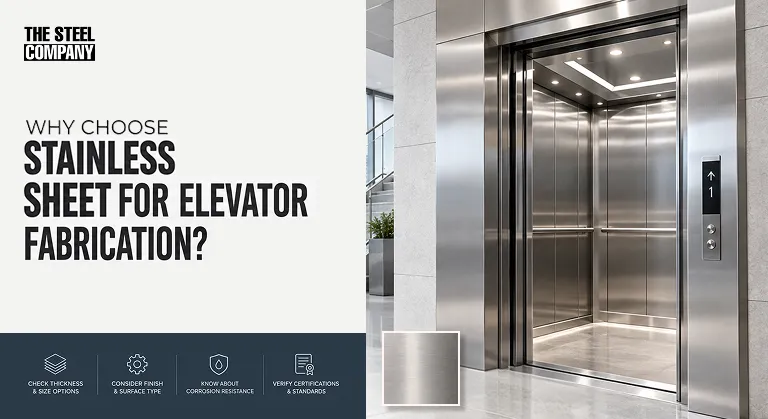
Choosing the right material is significant for elevator building. The material must be capable of accurate functioning in regular operation, fulfilling the design requirements and suitable for processing. The material must provide an optimal level of durability but keep the processing easy.
That is the reason the materials commonly used in elevator construction are stainless steel plates. This material has a combination of such properties as high corrosion resistance, strength, and ease in maintaining various finishes.
As this material can be processed into various elevator elements, walls, doors, ceilings, etc fabricators choose it according to the task.
Selecting stainless steel sheet is not a matter of only visual aesthetics. The success of this choice mostly depends on the steel grade and gauge, finishing and processing method.
Why is stainless steel a practical choice for elevators?
An elevator cabin is not a space that only needs to look good. It must stay presentable after repeated use. Hundreds of people may touch the walls, doors, buttons, and handles during the day.
A suitable material should be easy to clean and should not lose its appearance quickly.
Stainless steel fits these needs well. In addition, it is durable and resistant to corrosion. At the same time, it is available in various finishes, so it can suit different elevator designs.
Moreover, the material is easy to cut, shape, bend, and polish. As a result, it can be fabricated into different forms based on the project requirements.
This makes it useful for different parts of a cabin, including:
- Wall panels
- Door panels
- Ceiling panels
- Control panel surrounds
- Handrails
- Decorative trims
- Kick plates
- Column or corner coverings
With the right finish, the same material can be used in a simple office lift or a more decorative hotel elevator.
For projects that need a wide choice of finishes and sheet options, you can explore the range of stainless steel sheet available from The Steel Company.
The main benefits of stainless steel sheet in elevator fabrication
There is no single reason why stainless steel is used in elevator cabins. Its value comes from several features working together.
1. Strong enough for regular use
The elevator’s interior is used on a daily basis. The door opens and closes again and again. People lean on the wall, transport their luggage and even help move furniture by touching it.
Because of all this, it requires a good-quality stainless steel sheet to endure the conditions it is exposed to.
The sheet can be selected in the right grade and thickness depending on specific project and fabrication needs.
2. Better resistance to moisture and corrosion
Elevators may get wet due to wet footwear, service operations, and moisture-rich environments. Various types of buildings, such as hotels, hospitals, and shopping centers, necessitate cleaning operations inside elevators.
Stainless steel is rust-resistant but this varies depending on the grade of the material. The correct type must always be selected according to the environment and need of the project.
304 stainless steel sheet is the most common material for design indoors due to its durability and anti-rust characteristics.
If the highest levels of rust resistance are necessary, 316 stainless steel sheets may be used.
3. Easy to clean
Elevator interiors gather dust, fingerprints, and stains while in regular use. A complicated surface makes cleaning difficult. Stainless steel surfaces are much easier to clean when the proper finish and cleaning method are applied.
Smooth finish types such as mirror finish and some types of brushed finish can be wiped clean by a soft cloth using the right cleaner. This is particularly useful when the elevators are cleaned several times a day in the buildings.
4. Many finish options
One of the biggest advantages of stainless steel is that it does not have to look the same in every project. Depending on the design, fabricators can work with finishes such as:
| Finish | Where it can work well |
| Mirror | Luxury hotels, modern commercial spaces |
| Hairline | Offices, apartments, general commercial lifts |
| Brushed | Contemporary and low-glare interiors |
| Satin or matte | Soft, simple cabin designs |
| Etched | Decorative patterns and feature panels |
| Embossed | More detailed and textured designs |
| PVD coloured finish | Premium interiors and statement designs |
The choice depends on the look of the cabin, lighting, cleaning needs, and overall interior design.For example, a mirror finish can make a smaller cabin feel brighter.
A hairline finish gives a more subtle look. Decorative finishes can be used when the elevator itself needs to become part of the interior design.
Choosing between 304 and 316 stainless steel
Grade selection should not be based only on appearance. Both 304 stainless steel sheet and 316 stainless steel sheet can be used for architectural and interior work, but the final choice depends on the environment and project requirements.
Here is a simple comparison:
| Feature | 304 Stainless Steel Sheet | 316 Stainless Steel Sheet |
| Common uses | Interior and general commercial use | Areas that need higher corrosion resistance |
| Appearance | Modern and clean | Modern and clean |
| Corrosion resistance | Good | Higher |
| Common elevator use | Offices, homes, retail spaces, and hotels | Elevators in areas with greater exposure |
| Cost | Generally more affordable | Generally more expensive |
For many standard elevator interiors, 304 stainless steel sheet can work well. However, the choice should depend on the environment, exposure, cleaning needs, and project requirements.
Different Finish Options for Stainless Steel Sheet
There are several kinds of finishes for stainless steel sheets, allowing for more opportunities for fabricators to work on elevator projects. The choice of finish depends on the look, lighting, maintenance requirements, and interior design.
The mirror stainless steel sheet is characterized by its brightness and reflectivity. This finish may suit the smaller elevators in which a more open design is required.
The hairline and brushed finishes are more simple in their look. They bring more texture to the design but do not make the design look crowded.
For the projects requiring more intricate design, there are etched and embossed sheets. Lines, patterns, and any other designs may be incorporated into the design of chosen panels.
The PVD finishes may also be applied for elevator interiors. They come in various colors like gold, black, bronze, rose gold, and champagne.
Why fabrication quality matters
Selecting the proper material is not enough for the process of fabricating the panels. The panels have to be fabricated correctly to fit into the elevator perfectly.
The fabrication of the panels is done based on the dimensions of the elevator and cabin. Small differences from the exact measurement can cause problems in the assembly process.
The fabrication processes involved may include:
- Measuring the panel
- Cutting the sheet
- Bending the sheet
- Edge finishing
- Drilling the holes
- Joining
- Polishing, if required
Besides the proper fabrication, the panels have to fit in well with the doors, corners, buttons, and other components of the elevator.
The fabrication and installation process requires care to avoid scratching or marking the panel’s surface.
Using decorative stainless steel sheet for elevator interiors
Not every elevator needs a plain metal finish. In hotels, shopping centres, premium offices, and luxury residential buildings, the elevator can be part of the interior design. In such cases, a decorative stainless steel sheet can be used to add pattern, colour, or texture.
For example, designers can combine:
- Hairline wall panels with mirror trims
- PVD coloured panels with neutral flooring
- Etched designs with simple ceiling panels
- Brushed surfaces with darker control panels
- Decorative feature panels with plain side walls
The key is to avoid using too many finishes in one small space. Elevator cabins are compact, so a simple combination often gives a cleaner result.
What should you consider before selecting the sheet?
Before ordering a sheet for elevator fabrication, it helps to check more than just the finish.
Consider these points:
1. Position of the lift
Determine where the elevator will be installed: in a residential, office, hotel, hospital, or shopping mall building, among others.
2. Usage level
A passenger lift in a heavily used commercial building will require a material and finish different from a residential lift that is not used much.
3. Grade of stainless steel
Choose the grade depending on the conditions and specifications required.
4. Thickness of the sheet
The thickness should depend on the design of the panel, the method of mounting, bends, and the manufacturing process.
5. Finish of the surface
Consider issues such as lighting, fingerprint marks, cleanliness, and the overall interior design.
6. Size and arrangement of the panels
Good planning will eliminate any unnecessary joints.
7. Edge and cut-out details
Switches, controls, doors, lights, and ventilation openings need accurate cut-outs.
These details may seem small, but they can make a major difference once the cabin is installed.
Where stainless steel fits into modern elevator design
Modern elevator design is not only about function. Building owners and designers often want the cabin to match the rest of the property.
That is why stainless steel continues to work well in different settings. It can look simple in an office and more luxurious in a hotel without changing the basic material.
A stainless steel elevator cabin can be designed with clean lines and a minimal finish, or it can include decorative panels, coloured surfaces, and custom details.
The same flexibility is useful when an old elevator is being upgraded. Instead of changing the complete structure, new wall panels, doors, trims, and other visible surfaces can be designed around the existing cabin where suitable.
You can learn more about stainless steel solutions for elevator interiors through The Steel Company’s [stainless steel elevator] stainless steel elevator solutions service.
Why stainless steel works well for long-term elevator interiors
An elevator needs to remain useful for years, but the interior should not start looking worn too quickly.
Stainless steel helps because it combines practical performance with design flexibility. It can handle regular use, offers corrosion resistance, and can be cleaned without much effort when maintained correctly.
At the same time, the material gives designers many ways to create a different look. A simple stainless steel elevator can have a clean brushed finish. A luxury project can use coloured or patterned panels.
That balance is one of the main reasons stainless steel remains a common choice for elevator fabrication.
Final thoughts
Choosing the right material for an elevator cabin is not only about appearance. Instead, the sheet should suit the level of use and the cleaning
routine. At the same time, it should match the design and fabrication process.
In addition, the surrounding environment also needs to be considered. Therefore, looking at all these points together helps in choosing the right sheet for the project.
The selection of an appropriate stainless steel sheet creates the best foundation for manufacturing the elevator wall panels, door panels, trims, ceiling panels, and other components.
If the right material is selected along with an effective method for finishing and fabrication, it would ensure that the cabin looks good and functional.
When needed, cutting and finishing can be customised according to the project requirements. In this way, the right sheet and the right fabrication process work together. As a result, the job becomes easier, more accurate, and more effective.
A stainless steel elevator cabin should not necessarily have an elaborate design. The right material and the right finish,along with the right process of fabrication, can be enough.
